
Human Behaviour 2026
An annual Special Edition bringing together published research animations around a shared research theme.

Open for Submissions

Annual Special Edition

Open Access
Special Edition Information
Human behaviour is shaped by far more than individual choice. The organisations we work within, the communities around us, the information we receive and the social systems we inhabit all influence how we think, decide and act.
This Special Edition brings together published research exploring these influences from a range of perspectives, including decision-making, social behaviour, workplace culture, inequality, communication and cognition. Together, the research offers insight into the social, cultural and psychological forces that shape human behaviour.
Edition Editor

Dr Nelly Berg
Executive Editor

Dr Suzanne O’Keeffe | Silence Does the Work: Exploring the Hidden Force that Shapes Institutions
In many institutions, the rules that matter most are never officially stated. Nobody tells a male primary school teacher to think twice before physically comforting an upset child. Nobody writes into a curriculum that certain topics are off-limits. And yet everyone seems to know. Dr Suzanne O’Keeffe at Maynooth University argues that this kind of unspoken order is a force that shapes knowledge, constrains behaviour, and deserves to be properly interrogated.

Dr Nicholas Nicholson | Why Data Needs Context and How to Achieve it in Practice
Data are a key driver in the modern era. Combining data from different domains brings new insights and adds further dimensions to scientific research, but data on their own rarely explain themselves. Without context, data are not meaningful and can lead to erroneous conclusions. Making sense of data is at the heart of recent research led by Dr Nicholas Nicholson at the European Commission’s Joint Research Centre and Dr Iztok Štotl at the University of Ljubljana, to build a standardised data-contextualisation framework called SOLICIT.

Dr Ludwig Huber | How Dogs Remember Your Perspective, to Steal Without Getting Caught
What goes through a dog’s mind when your back is turned? According to new research from the University of Veterinary Medicine Vienna, the answer might surprise you. A study led by cognitive scientist Ludwig Huber suggests that dogs are capable of something remarkably sophisticated: anticipating what a person can see, even when that person is nowhere in sight.

Dr. Khuthala Mabetha | How Social Support Shapes Pregnancy for Young Women in South Africa
Pregnancy can be a time of excitement and hope, but it can also bring uncertainty, stress and emotional upheaval, especially for young women navigating major life changes. A study led by Dr. Khuthala Mabetha and colleagues sheds light on how social support shapes the pregnancy experiences of young women in Soweto, South Africa, revealing just how powerful everyday relationships can be during this pivotal period.
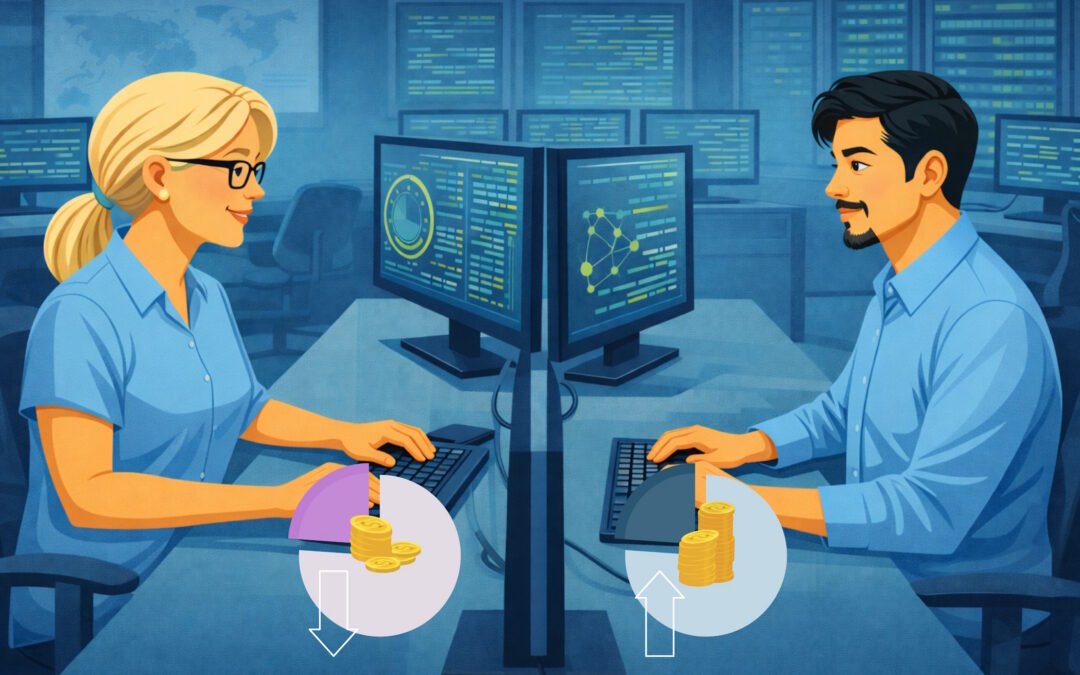
Dr Susanna Bairoh | Equal Degrees, Unequal Incomes: New Evidence from Finland’s STEM Workforce
Even in countries celebrated for gender equality, women still earn less than men – and moving into science and technology does not magically solve the problem. New research by Susanna Bairoh, Satu Pyöriä and Niklas Mäkinen takes a close look at this puzzle by following the incomes of women and men working in STEM fields in Finland, a Nordic welfare state often seen as a global role model for equality. Drawing on exceptionally rich national register data, the study asks a deceptively simple question: if women and men have the same level of education, work in the same broad fields, and live in a country with strong family policies, do their incomes finally converge?
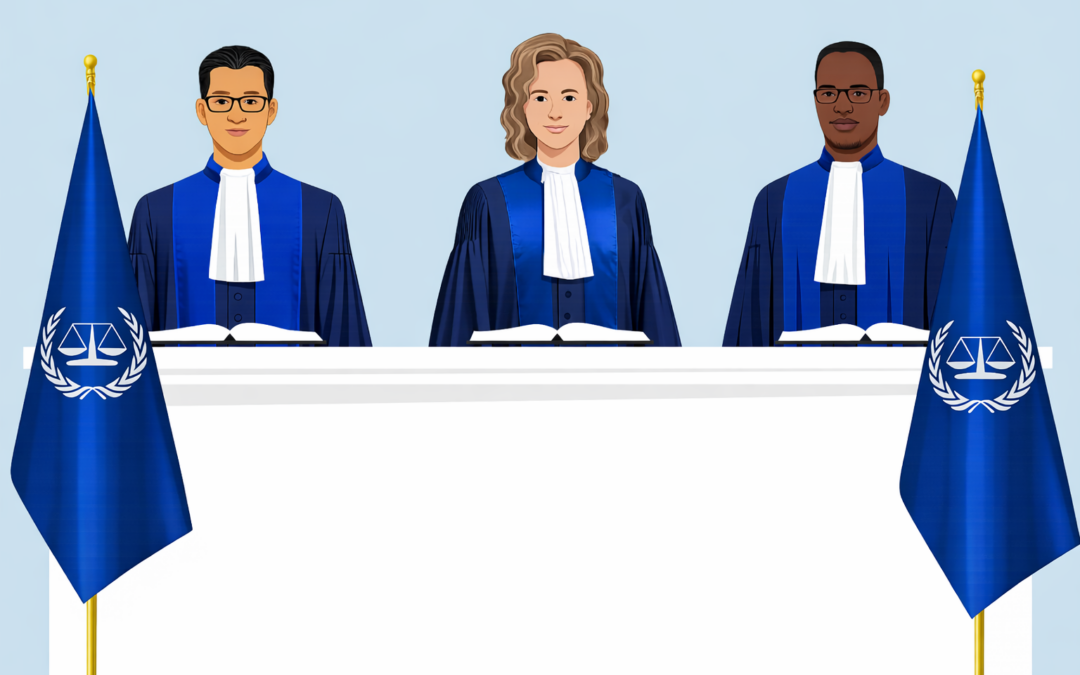
Assistant Professor Ligeia Quackelbeen | How do Judges categorize conduct as a crime in International Criminal Law and what roles does culture play?
How do judges decide what counts as a crime and which crime? Take marriage. In some cultures, it’s defined by family consent or monogamy. In others, by religion or ritual. What if judges must fit these diverse practices into fixed legal categories? Research by Assistant Professor Ligeia Quackelbeen of Tilburg University examines this, focusing on the International Criminal Court’s landmark 2021 Ongwen judgment.

Laura Park | A New Self-Study Method for Language Teacher Education
What happens when a language teacher educator stops grading her students’ reflective essays and starts writing back to them instead? For Laura Park, who educates student English teachers at Ewha Womans University in South Korea, that simple shift sparked an entire research methodology. More importantly, it offered a way for teacher educators to better understand their students’ experiences and assumptions, helping them become more reflective, empathetic teachers.
Dr Suzanne O’Keeffe | Silence Does the Work: Exploring the Hidden Force that Shapes Institutions
In many institutions, the rules that matter most are never officially stated. Nobody tells a male primary school teacher to think twice before physically comforting an upset child. Nobody writes into a curriculum that certain topics are off-limits. And yet everyone seems to know. Dr Suzanne O’Keeffe at Maynooth University argues that this kind of unspoken order is a force that shapes knowledge, constrains behaviour, and deserves to be properly interrogated.

George Borski – Ivan Kolkov | Was Copernicus an Astrologer? New Evidence Closes an Old Debate
For many decades, historians have argued over whether Nicolaus Copernicus – the astronomer who first proposed that Earth orbits the Sun rather than the other way around – also cast horoscopes and used astrology in his medical practice. It sounds like a simple question, but it has generated some of the most heated debates in the history of science. Now, a new paper by George Borski and Ivan Kolkov brings fresh evidence to bear on the controversy, and the answer is more nuanced than either side expected.

Dr. Leonie Brummer | Digital Awareness: The Missing Piece of Online Life
Most of us use digital technology every day – for work, shopping, socialising, and keeping up with the news. But how many of us really stop to think about what we’re doing online, why we’re doing it, and what the consequences might be? That’s the question at the heart of new research by researcher Leonie Brummer at Utrecht University, who argues that being truly at home in the digital world requires something deeper than skills alone.

Dr. Deon Brown | Understanding How African Americans Navigate Emotional Expression
Human emotions are universal. But how freely people express them – and to whom – is shaped by culture, history, and lived experience. For African Americans, that shaping has a particular weight: centuries of racism and oppression have made emotional expression not just a personal matter, but a protective and sometimes strategic one. Understanding how Black Americans navigate this reality is not only a matter of psychological interest – it has real implications for mental health, education, and family life. This is the territory explored by Dr. Deon Brown and his colleagues at the University of Houston, Virginia Commonwealth University, American Jewish University, and Michigan State University.

Professor Robert F. Slesinski | What Does It Mean for Everything to Be One? Revisiting a Russian Philosophical Tradition
What if love is not merely an emotion, but the very fabric of existence itself? That is the arresting question at the heart of a new paper by Robert Slesinski, a researcher working in the tradition of Russian Orthodox thought. Drawing on a rich lineage of thinkers stretching from the nineteenth century to the twentieth, Slesinski traces the development of a remarkable idea: that all of reality forms a single, interconnected unity – and that this unity, at its deepest level, is nothing other than love.
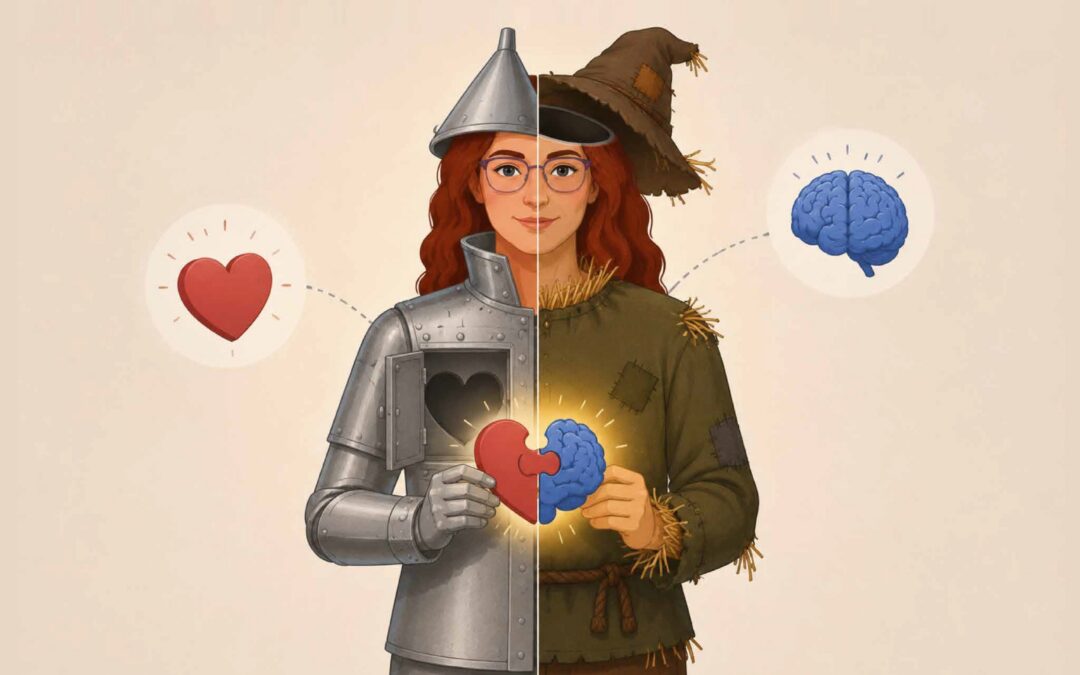
Professor Daniel S Levine | Why Reason Needs Emotion: Uncovering the Science Behind Better Decisions
For centuries, we’ve been told a story about ourselves: that reason is noble and emotion is messy; that to think clearly, you need to keep your feelings firmly under control. It’s a story that has shaped science, politics, economics, and culture. But what if it’s simply wrong? That’s the central argument of psychologist and neuroscientist Daniel Levine from the University of Texas at Arlington in his book: Healing the Reason-Emotion Split.

Jila Ghomeshi | How Canadian Weather Forecasts Are Challenging Grammar Rules
Weather forecasts seem straightforward – temperatures, clouds, maybe a bit of rain. But the language used to describe the weather can reveal surprising quirks about how English works. A recent linguistic study takes a closer look at an unusual pattern heard in Canadian radio forecasts and shows that even familiar phrases like “we are five degrees” can challenge long-held assumptions about grammar.
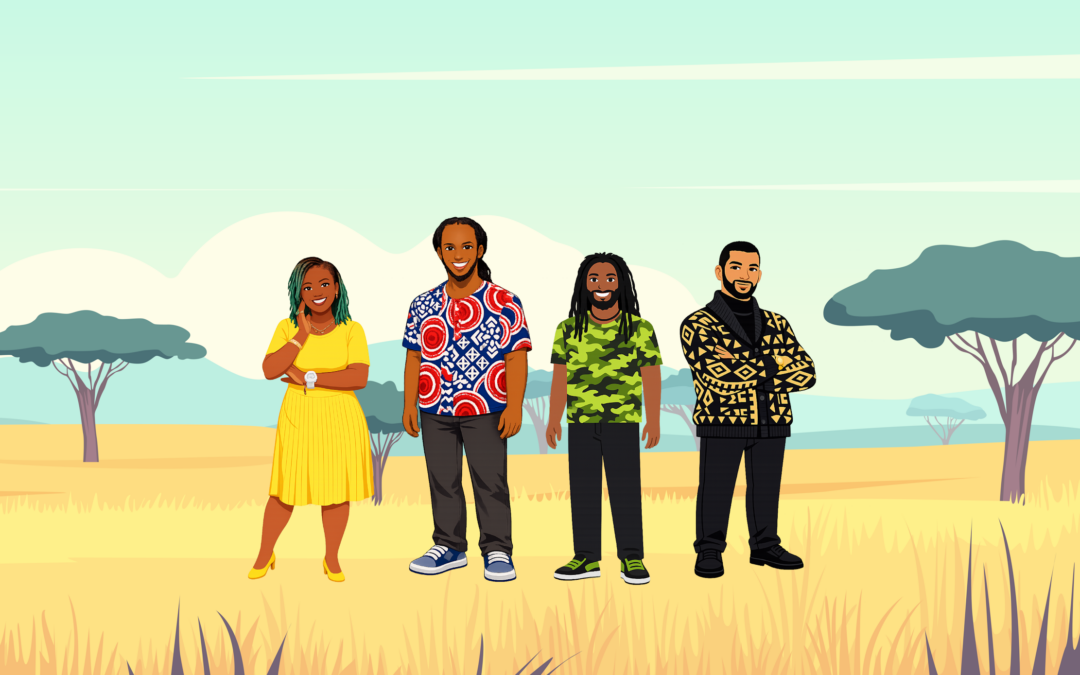
Project 1444
Before there were borders… before conquest rewrote the maps… there was Africa – the birthplace of humanity. Cradle of civilizations, technologies, philosophies, and sacred traditions that shaped the ancient world. Yet too often, Africa’s story is forced to begin in bondage – with loss, rupture, and the European Slave Trade.

Dr Yevgenia Chvertko | Welding Art: The Ukrainian Researchers Joining Steel and Sculpture
When Ukrainian sculptor Serhii Minakov set out to create ‘Into the Future’ – a towering steel artwork featuring a young man and woman inside a globe – he ran into a problem familiar to anyone who has tried to weld complex sculptures: how do you make a strong, clean joint when you can only reach it from one side?
Dr Ludwig Huber | How Dogs Remember Your Perspective, to Steal Without Getting Caught
What goes through a dog’s mind when your back is turned? According to new research from the University of Veterinary Medicine Vienna, the answer might surprise you. A study led by cognitive scientist Ludwig Huber suggests that dogs are capable of something remarkably sophisticated: anticipating what a person can see, even when that person is nowhere in sight.
Assistant Professor Ligeia Quackelbeen | How do Judges categorize conduct as a crime in International Criminal Law and what roles does culture play?
How do judges decide what counts as a crime and which crime? Take marriage. In some cultures, it’s defined by family consent or monogamy. In others, by religion or ritual. What if judges must fit these diverse practices into fixed legal categories? Research by Assistant Professor Ligeia Quackelbeen of Tilburg University examines this, focusing on the International Criminal Court’s landmark 2021 Ongwen judgment.
About SciTube Special Editions
SciTube Special Editions bring together published research animations around shared themes, creating additional opportunities for discovery, accessibility and dissemination.

How to Cite
Guidance for referencing and citing SciTube research animations.

Editorial Standards
Learn about SciTube’s editorial process, research accuracy and publishing standards.

Publication & Access
Information about publication, accessibility, licensing and dissemination.
Stay Up To Date With SciTube