
Engineering and Technology
Explore Engineering and Technology

Guy Hutton – Sue Coates | The Case for One Shared Sanitation Assessment Framework
Imagine trying to fix a leaky pipe without knowing where the leak is, or even what the pipe looks like. That’s roughly the challenge facing governments and investors trying to improve sanitation services across the world’s poorer countries. Billions of people still lack access to safe toilets, and the money needed to change that is falling badly short. A new review by Guy Hutton and Sue Coates sets out, for the first time, just how many tools exist to help diagnose the problem, and why so few of them are working as well as they could.
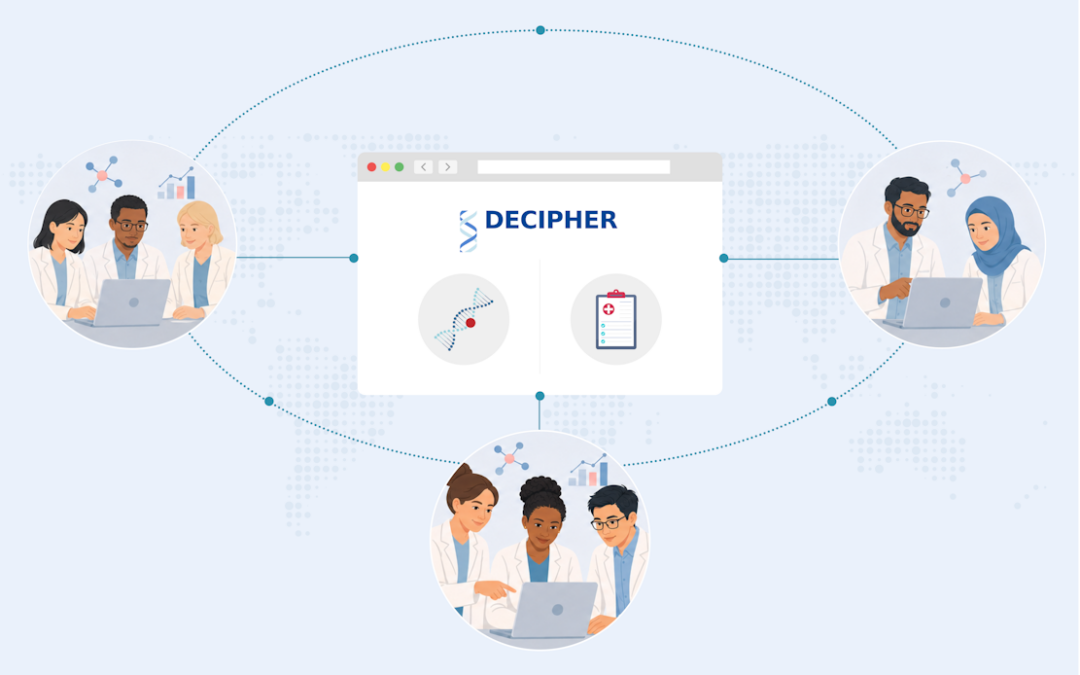
DECIPHER: How Individuals with Rare Genetic Disorders Can Help Build a Global Knowledgebase
Attempts at disease diagnosis are often hindered by a frustratingly thin trail of evidence: a single patient, a single unusual variant, and no easy way to know whether anyone else in the world has seen the same thing. DECIPHER, a free platform hosted at EMBL’s European Bioinformatics Institute, exists to help expert clinicians and researchers alleviate this problem. First launched in 2004, DECIPHER brings together genomic variants and clinical symptoms from rare disease patients worldwide.

Dr Solly Lebelo – Dr Tranos Zuva | How Mathematics Can Make Gas Combustion Safer
Every time natural gas ignites on a kitchen hob or powers an industrial furnace, a complex chain of chemical reactions unfolds in fractions of a second. Now, Dr Solly Lebelo and Dr Tranos Zuva, both based at Vaal University of Technology in South Africa, have developed a detailed mathematical model to better understand exactly what happens during that process – and what could go dangerously wrong.

A Smarter Way to Spot Faults in Seismic Monitoring Stations
Keeping seismic monitoring stations in top condition is essential for studying Earth’s interior, and for detecting earthquakes, military explosions, ocean storms and even meteorites entering the atmosphere. But with many stations operating in remote locations, spotting the first signs of equipment problems can be surprisingly difficult. In a new study, Arthur Cuvier, Éric Beucler, Mickaël Bonnin and Raphaël Garcia in France have developed a clever statistical technique that could help scientists identify failing instruments long before serious damage occurs.

Dr Rolien Terblanche | Designing Living Walls that Can Survive in South African Cities
What does it actually take to build a living wall that survives one of South Africa’s driest, most climatically varied cities, and what would it cost? Those were the questions Rolien Terblanche and colleagues at the University of Cape Town set out to answer, designing a new system for the Western Cape.

Ole Anders Nøst | Why Bigger Wind Farms Are Less Effective
As climate change accelerates and energy demand continues to rise, countries are racing to replace fossil fuels with cleaner sources of power, such as off-shore wind. In regions such as the North Sea, plans are underway for a dramatic expansion of off-shore turbines, with the hope that wind could supply a large share of Europe’s future power. But how much energy can we realistically extract from the air?

Professor Nigel Spooner | Shining a Light on Asbestos: How Fluorescence Technology Could Save Lives
In Australia, asbestos remains a hidden danger in countless buildings, despite being banned more than two decades ago. Roughly one in three homes still contains asbestos, and when materials degrade or are disturbed, the fibres can pose deadly health risks. Each year, about 4,000 Australians die from asbestos-related diseases – a sobering reminder of the urgent need for safer detection methods. A research team led by Professor Nigel Spooner at Adelaide University has been tackling this challenge head-on.

STUOD: Predicting the Oceans in a Warming World
Climate change is changing our oceans in ways that we are still working to understand. The sea absorbs vast amounts of heat and carbon, and even more so as the global temperature rises. But predicting how that energy moves through the ocean – and what it means for climate, sea level, marine life, and weather – remains a major scientific challenge. The international research project STUOD is working to address this.
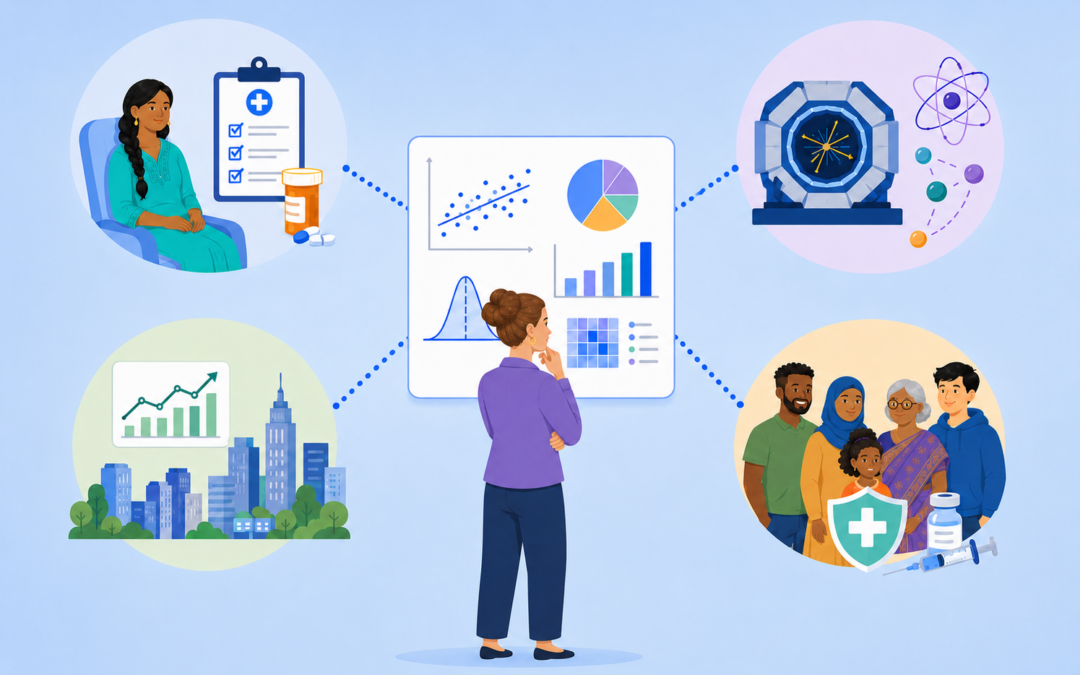
Michael Evans | Statistical Evidence and Statistical Reasoning: Rethinking What Data Really Tell Us
Statistics is everywhere. From clinical trials to particle physics, from economic policy to public health, researchers rely on statistical analyses to determine what the data are telling them. Despite this central role in modern science, there is a striking gap at the heart of the discipline: no universally agreed definition of what statistical evidence actually is. That gap matters. When scientists say ‘the evidence suggests’ or ‘based on the data we conclude’, what exactly do they mean? University of Toronto statistician Michael Evans has spent years arguing that this question is not merely philosophical – it is foundational, and leaving it unanswered has real consequences for scientific reliability.
Dr Nicholas Nicholson | Why Data Needs Context and How to Achieve it in Practice
Data are a key driver in the modern era. Combining data from different domains brings new insights and adds further dimensions to scientific research, but data on their own rarely explain themselves. Without context, data are not meaningful and can lead to erroneous conclusions. Making sense of data is at the heart of recent research led by Dr Nicholas Nicholson at the European Commission’s Joint Research Centre and Dr Iztok Štotl at the University of Ljubljana, to build a standardised data-contextualisation framework called SOLICIT.

The NTLGroup Cognitive Systems Platform: From Cognitive Recovery to Real-World Performance
What if the problem is not whether someone has ability… but whether they can reliably access that ability when it matters? Traditional models tend to separate cognitive recovery from performance enhancement. But many people fall in between. They may function well at baseline, yet lose consistency under stress, fatigue, or increasing demand. NTLGroup developed the Cognitive Systems Platform to close this gap. Rather than training isolated skills, the platform focuses on the underlying system conditions that make reliable cognition possible: coordination, stability, efficiency, regulation, and access.

Dr Yevgenia Chvertko | Welding Art: The Ukrainian Researchers Joining Steel and Sculpture
When Ukrainian sculptor Serhii Minakov set out to create ‘Into the Future’ – a towering steel artwork featuring a young man and woman inside a globe – he ran into a problem familiar to anyone who has tried to weld complex sculptures: how do you make a strong, clean joint when you can only reach it from one side?
Stay Up To Date With SciTube