
SCIENTIFIC ANIMATION SINCE 2015
Complex Topics. Understood in a Few Minutes.
Making complex research clear, engaging and accessible to wider audiences.
We help researchers, institutions and publishers bring their work to life through professional scientific animation. From scriptwriting and illustration to production, publication and active dissemination, we handle the entire process. You approve the content at every key stage, ensuring your research is communicated clearly and accurately.
Order Your Video →We've worked with researchers at



NEW AT SCITUBE
Discover Special Editions.
Every SciTube animation joins a themed collection of related research, creating another opportunity for audiences to discover, explore and understand your work.
Explore Special Editions →
Urban Design for Safe and Sustainable Cities 2026

Improving Treatment, Recovery & Care 2026
Women, Children & Family Health 2026

Targeting Cancer & Blood Disease 2026
How Life Works: Cells, Genes & Metabolism 2026

Evidence, Measurement & Scientific Discovery 2026
Materials, Energy & Smarter Design 2026

Living With a Changing Planet 2026

Meaning, Language & Human Thought 2026

How Institutions Shape People & Society 2026
How We Think, Feel & Perform 2026
FRESH FROM SCITUBE
Latest Research Animations

Akira Ikemi | Focusing-Alpha: The Natural Process Behind Therapeutic Change
Have you ever tried to put a feeling into words, and found that the words you reached for were not quite right? Then, a few seconds later, a better description arrives, and suddenly it clicks: yes, that’s it. The philosopher and renowned psychotherapist Eugene Gendlin noticed his most successful therapy clients doing this all the time. They would go quiet, sit with something unclear, and slowly let the right words surface. Gendlin called this ‘focusing’.

Leni Schwendinger | Night for Day: How Designing the Dark Could Save Our Cities
Imagine stepping outside at midnight to visit a library, browse a street market, or catch an open-air concert in the park. This isn’t a scene from a science fiction film – it’s the future that nighttime designer Leni Schwendinger believes we urgently need to build.
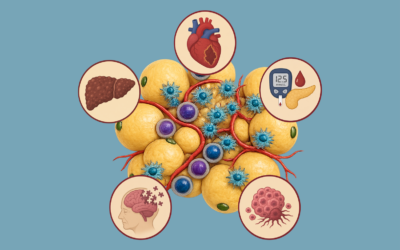
Dr Yvonne Böttcher | How Different Types of Fat Shape Health and Disease
Our bodies store fat in different places. Subcutaneous fat sits just under the skin – this is the fat you can pinch. Visceral fat, by contrast, lies deeper in the abdomen and wraps around internal organs. Doctors have long observed that visceral fat is more strongly associated with conditions such as type 2 diabetes and heart disease. Research led by Yvonne Böttcher at the University of Oslo in Norway reveals a surprisingly complex picture that could help explain why some types of body fat are more strongly linked to disease.
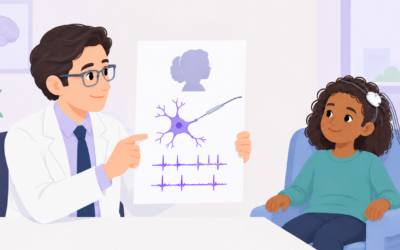
Dr David Bonda | How Children are Helping Scientists Understand the Brain from the Inside
When a child’s epilepsy doesn’t respond to medication, doctors sometimes need to place tiny electrodes deep inside the brain to pinpoint exactly where seizures begin. It’s a routine part of preparing some children for surgery to cure their seizures. But according to a new paper led by David Bonda and colleagues at Cedars-Sinai Medical Center, those same electrodes could be doing something else too: teaching us how the developing brain actually works.
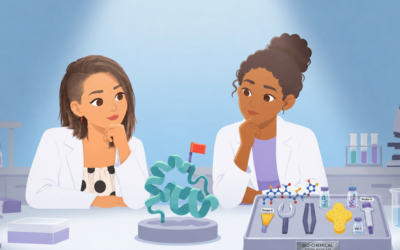
Dr Rita Petracca | The Tiny Chemical Tag That Could Change How We Fight Disease
Proteins are the working parts of our cells, built from long chains of building blocks called amino acids. But once a protein is built, the body often isn’t finished with it: small chemical tags get attached afterwards, changing how the protein behaves, where it travels, and how long it survives. One such tag, discovered only in 2011 and still poorly understood, is the focus of a new paper by Rita Petracca and colleagues at Utrecht University. It’s called lysine crotonylation, or Kcr for short, and Petracca’s team argues that it deserves far more scientific attention than it has received.
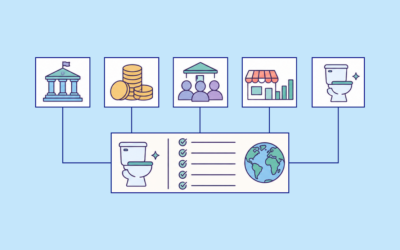
Guy Hutton – Sue Coates | The Case for One Shared Sanitation Assessment Framework
Imagine trying to fix a leaky pipe without knowing where the leak is, or even what the pipe looks like. That’s roughly the challenge facing governments and investors trying to improve sanitation services across the world’s poorer countries. Billions of people still lack access to safe toilets, and the money needed to change that is falling badly short. A new review by Guy Hutton and Sue Coates sets out, for the first time, just how many tools exist to help diagnose the problem, and why so few of them are working as well as they could.
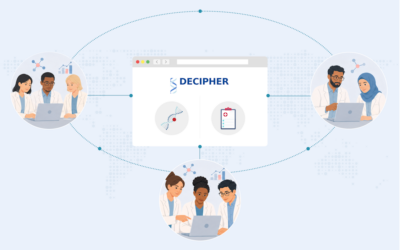
DECIPHER: How Individuals with Rare Genetic Disorders Can Help Build a Global Knowledgebase
Attempts at disease diagnosis are often hindered by a frustratingly thin trail of evidence: a single patient, a single unusual variant, and no easy way to know whether anyone else in the world has seen the same thing. DECIPHER, a free platform hosted at EMBL’s European Bioinformatics Institute, exists to help expert clinicians and researchers alleviate this problem. First launched in 2004, DECIPHER brings together genomic variants and clinical symptoms from rare disease patients worldwide.

Dr Solly Lebelo – Dr Tranos Zuva | How Mathematics Can Make Gas Combustion Safer
Every time natural gas ignites on a kitchen hob or powers an industrial furnace, a complex chain of chemical reactions unfolds in fractions of a second. Now, Dr Solly Lebelo and Dr Tranos Zuva, both based at Vaal University of Technology in South Africa, have developed a detailed mathematical model to better understand exactly what happens during that process – and what could go dangerously wrong.
IN THEIR OWN WORDS
What researchers gained from SciTube
From unexpected collaborations to positive funder feedback, see how researchers have put their videos to work.
“A team of speech therapists ... saw the video about my research online ... and contacted me regarding a collaborative project.”
“Our funders were also very pleased, commenting on how helpful and impactful the video was...”
“The video effectively communicates complex molecular biology to a general audience, garnering attention from scientists and students alike.”
“SciTube has helped us with one of our main commitments to our funding agency, in the popularisation of scientific results obtained using their funds.”
“I have circulated my animation to a few key colleagues already, and added it to my email signature and ResearchGate page”
“... the images and interpretation are of the highest quality. ... the collaborative process was unparalleled ...”
“I stepped back from my booth and watched how groups of people came to my booth watching at the movie explaining my work.”
“We have already featured our SciTube video on our website, shared it with customers, and presented it at a national conference.”
Explore Partnership Opportunities
Stay Connected

Research communication made freely available to wider academic, professional and public audiences.

SciTube publications are made available under Creative Commons licensing to support wider sharing and dissemination.