
Arts and Humanities
Explore Arts and Humanities

Leni Schwendinger | Night for Day: How Designing the Dark Could Save Our Cities
Imagine stepping outside at midnight to visit a library, browse a street market, or catch an open-air concert in the park. This isn’t a scene from a science fiction film – it’s the future that nighttime designer Leni Schwendinger believes we urgently need to build.
Dr Rory Mac Sweeney | How did Leonardo da Vinci inscribe the human body in both a circle and a square?
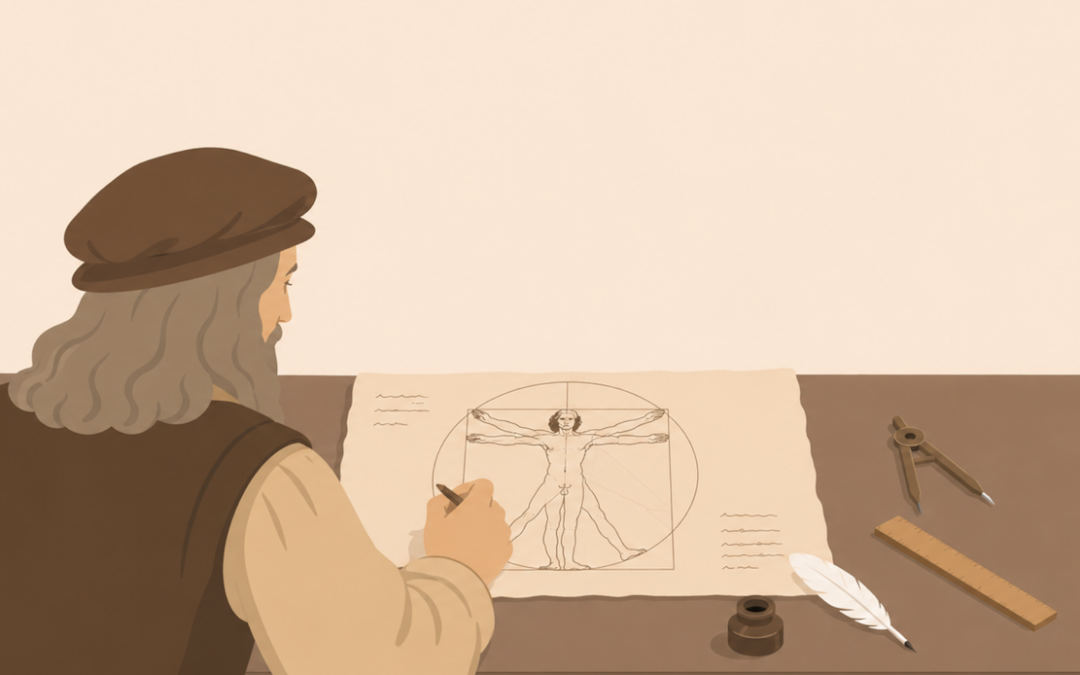
Around 1490, Leonardo da Vinci drew a man inscribed simultaneously within a circle and a square – the figure now known as Vitruvian Man. Measurements of the drawing place the ratio of the square’s side to the circle’s radius at approximately 1.645. Despite more than a century of analysis, no consensus has been reached on the geometric construction Leonardo used to generate that proportion. Independent researcher Dr Rory Mac Sweeney proposes reframing the problem geometrically. The circle represents radial geometry – organisation around a centre. The square represents orthogonal geometry – organisation along perpendicular axes. The question becomes: which geometric form mediates between them proportionally?
Deaf Legal Theory: Challenging Law’s Hearing Bias
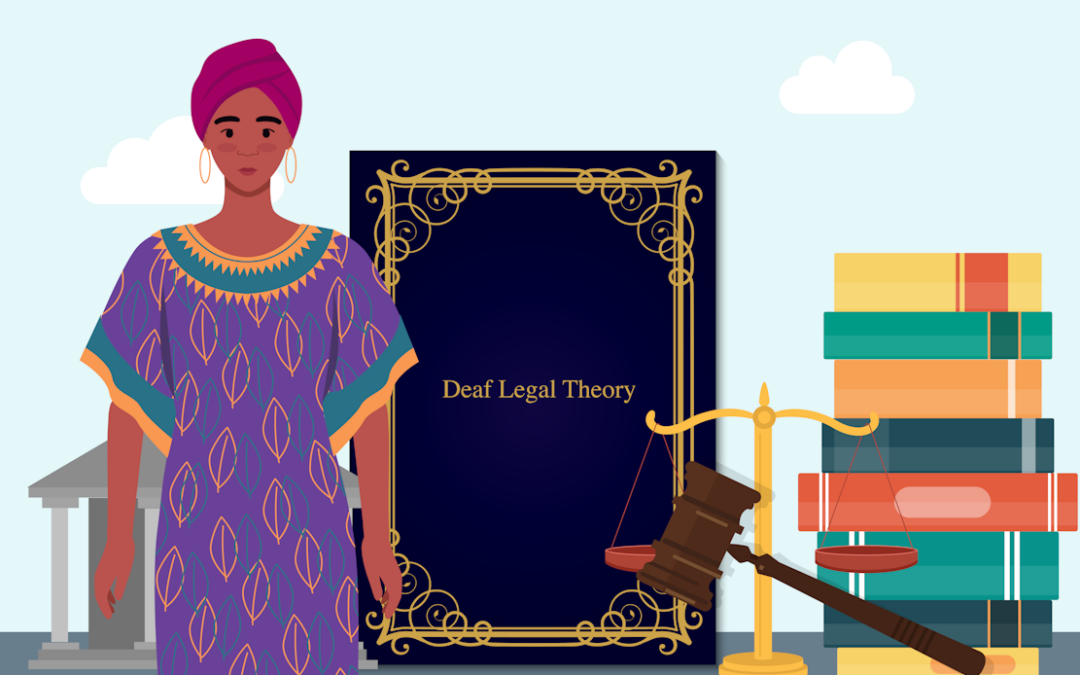
The Deaf Legal Theory (DLT) Model is a practical framework for examining law, policy and practice from deaf perspectives. You can learn more about at the following website:
https://deaflegaltheory.com/
Jean Olivier Nke Ongono | Service over Hierarchy: A New Leadership Model for the Catholic Church
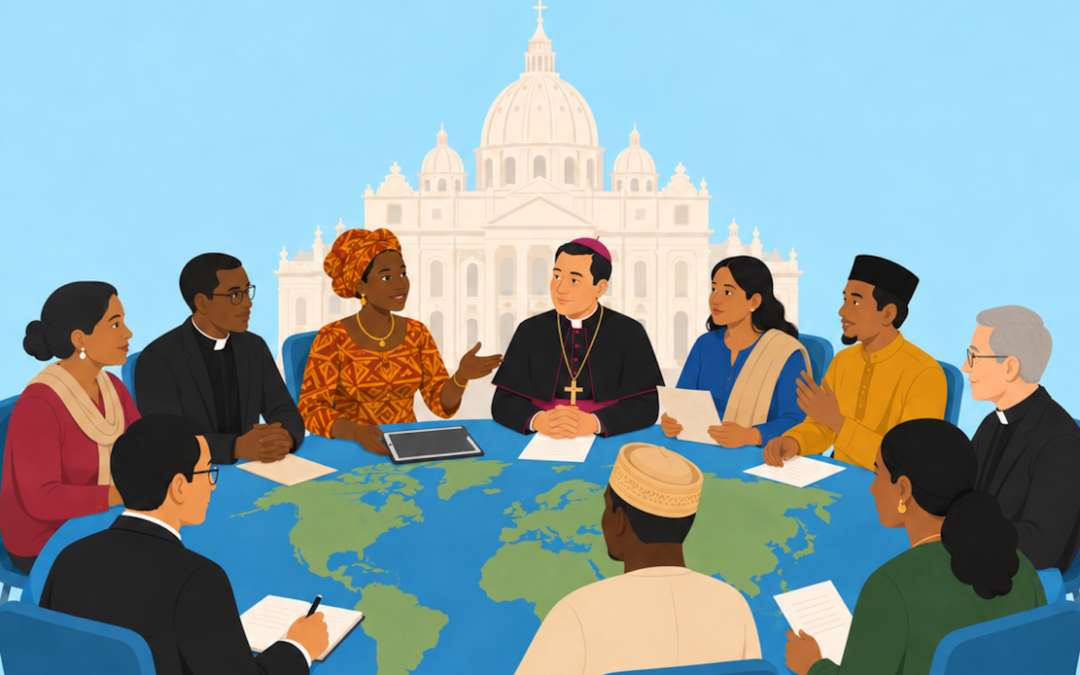
The Catholic Church is bigger than ever – but is it led well enough for the world it now serves? That’s the question at the heart of a paper by theologian Jean Olivier Nke Ongono, who argues that after a century of dramatic change, the Church needs a genuinely global rethink of how it’s governed without attempting to dilute the truths of faith or its identity.

Jingyi Wan | Can You Ever Escape Your Past? A New Reading of Breasts and Eggs
In Kawakami Mieko’s novel Breasts and Eggs, a woman decides to have a child alone, and must choose who the father will be. It looks like a simple decision. But researcher Jingyi Wan of the University of Amsterdam argues that Natsuko’s choice exposes a trap: modern societies offer women only two scripts for freedom, and neither actually delivers it.

Laura Park | A New Self-Study Method for Language Teacher Education
What happens when a language teacher educator stops grading her students’ reflective essays and starts writing back to them instead? For Laura Park, who educates student English teachers at Ewha Womans University in South Korea, that simple shift sparked an entire research methodology. More importantly, it offered a way for teacher educators to better understand their students’ experiences and assumptions, helping them become more reflective, empathetic teachers.
Dr Suzanne O’Keeffe | Silence Does the Work: Exploring the Hidden Force that Shapes Institutions
In many institutions, the rules that matter most are never officially stated. Nobody tells a male primary school teacher to think twice before physically comforting an upset child. Nobody writes into a curriculum that certain topics are off-limits. And yet everyone seems to know. Dr Suzanne O’Keeffe at Maynooth University argues that this kind of unspoken order is a force that shapes knowledge, constrains behaviour, and deserves to be properly interrogated.
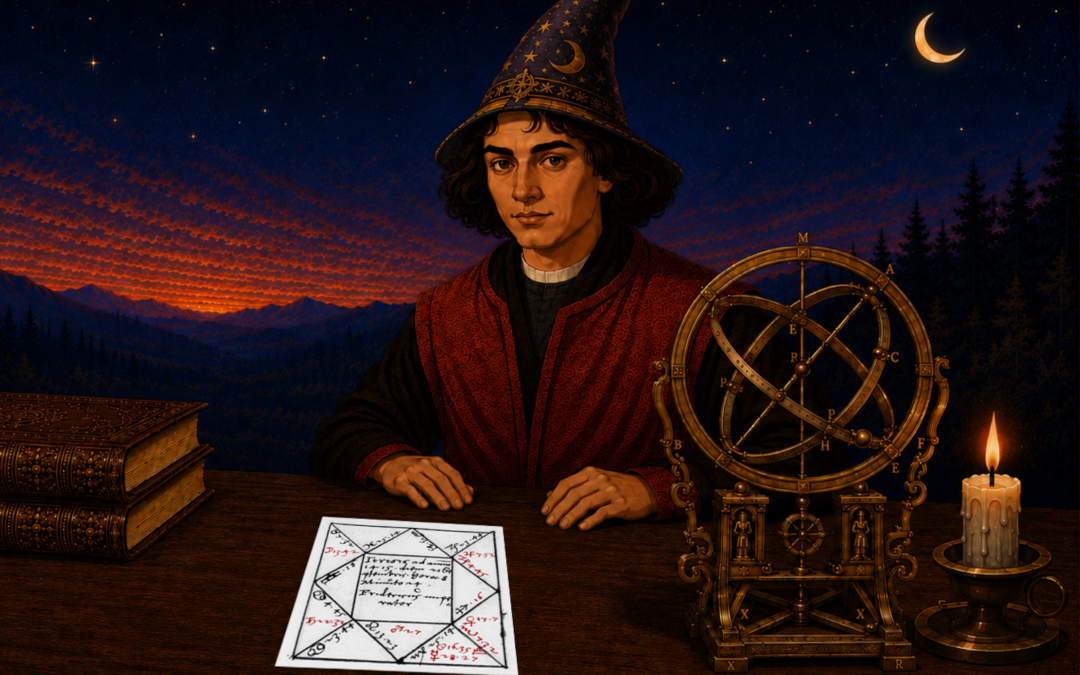
George Borski – Ivan Kolkov | Was Copernicus an Astrologer? New Evidence Closes an Old Debate
For many decades, historians have argued over whether Nicolaus Copernicus – the astronomer who first proposed that Earth orbits the Sun rather than the other way around – also cast horoscopes and used astrology in his medical practice. It sounds like a simple question, but it has generated some of the most heated debates in the history of science. Now, a new paper by George Borski and Ivan Kolkov brings fresh evidence to bear on the controversy, and the answer is more nuanced than either side expected.

Dr. Leonie Brummer | Digital Awareness: The Missing Piece of Online Life
Most of us use digital technology every day – for work, shopping, socialising, and keeping up with the news. But how many of us really stop to think about what we’re doing online, why we’re doing it, and what the consequences might be? That’s the question at the heart of new research by researcher Leonie Brummer at Utrecht University, who argues that being truly at home in the digital world requires something deeper than skills alone.

Dr. Deon Brown | Understanding How African Americans Navigate Emotional Expression
Human emotions are universal. But how freely people express them – and to whom – is shaped by culture, history, and lived experience. For African Americans, that shaping has a particular weight: centuries of racism and oppression have made emotional expression not just a personal matter, but a protective and sometimes strategic one. Understanding how Black Americans navigate this reality is not only a matter of psychological interest – it has real implications for mental health, education, and family life. This is the territory explored by Dr. Deon Brown and his colleagues at the University of Houston, Virginia Commonwealth University, American Jewish University, and Michigan State University.

Professor Robert F. Slesinski | What Does It Mean for Everything to Be One? Revisiting a Russian Philosophical Tradition
What if love is not merely an emotion, but the very fabric of existence itself? That is the arresting question at the heart of a new paper by Robert Slesinski, a researcher working in the tradition of Russian Orthodox thought. Drawing on a rich lineage of thinkers stretching from the nineteenth century to the twentieth, Slesinski traces the development of a remarkable idea: that all of reality forms a single, interconnected unity – and that this unity, at its deepest level, is nothing other than love.
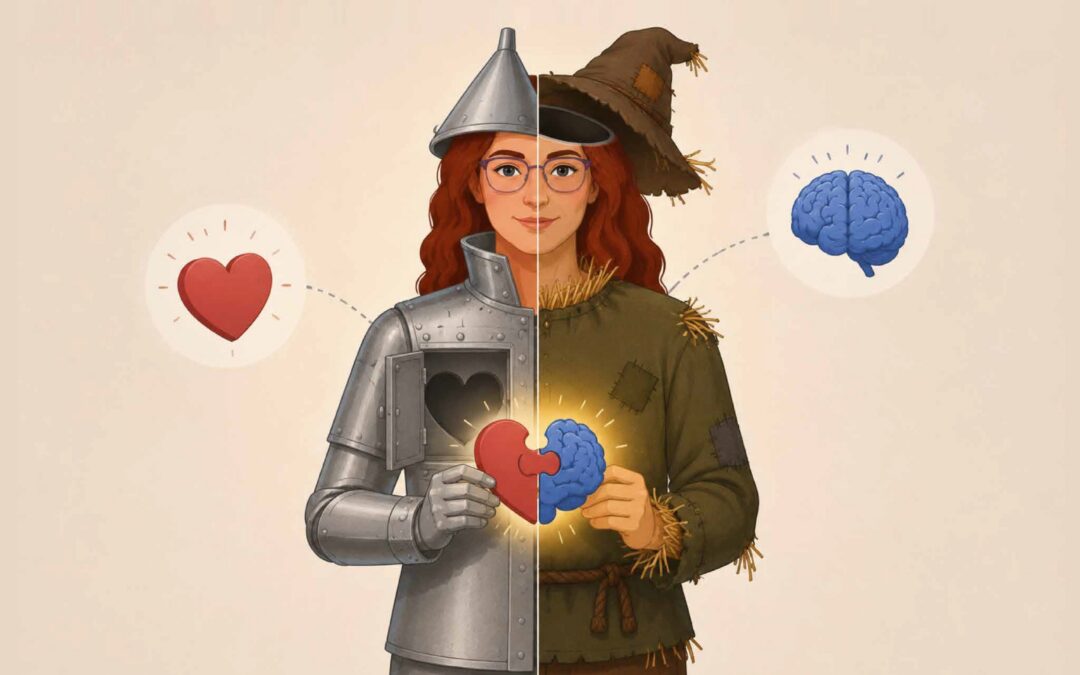
Professor Daniel S Levine | Why Reason Needs Emotion: Uncovering the Science Behind Better Decisions
For centuries, we’ve been told a story about ourselves: that reason is noble and emotion is messy; that to think clearly, you need to keep your feelings firmly under control. It’s a story that has shaped science, politics, economics, and culture. But what if it’s simply wrong? That’s the central argument of psychologist and neuroscientist Daniel Levine from the University of Texas at Arlington in his book: Healing the Reason-Emotion Split.
Leni Schwendinger | Night for Day: How Designing the Dark Could Save Our Cities
Imagine stepping outside at midnight to visit a library, browse a street market, or catch an open-air concert in the park. This isn’t a scene from a science fiction film – it’s the future that nighttime designer Leni Schwendinger believes we urgently need to build.
Dr Rory Mac Sweeney | How did Leonardo da Vinci inscribe the human body in both a circle and a square?
Around 1490, Leonardo da Vinci drew a man inscribed simultaneously within a circle and a square – the figure now known as Vitruvian Man. Measurements of the drawing place the ratio of the square’s side to the circle’s radius at approximately 1.645. Despite more than a century of analysis, no consensus has been reached on the geometric construction Leonardo used to generate that proportion. Independent researcher Dr Rory Mac Sweeney proposes reframing the problem geometrically. The circle represents radial geometry – organisation around a centre. The square represents orthogonal geometry – organisation along perpendicular axes. The question becomes: which geometric form mediates between them proportionally?
Deaf Legal Theory: Challenging Law’s Hearing Bias
The Deaf Legal Theory (DLT) Model is a practical framework for examining law, policy and practice from deaf perspectives. You can learn more about at the following website:
https://deaflegaltheory.com/
Jean Olivier Nke Ongono | Service over Hierarchy: A New Leadership Model for the Catholic Church
The Catholic Church is bigger than ever – but is it led well enough for the world it now serves? That’s the question at the heart of a paper by theologian Jean Olivier Nke Ongono, who argues that after a century of dramatic change, the Church needs a genuinely global rethink of how it’s governed without attempting to dilute the truths of faith or its identity.
Jingyi Wan | Can You Ever Escape Your Past? A New Reading of Breasts and Eggs
In Kawakami Mieko’s novel Breasts and Eggs, a woman decides to have a child alone, and must choose who the father will be. It looks like a simple decision. But researcher Jingyi Wan of the University of Amsterdam argues that Natsuko’s choice exposes a trap: modern societies offer women only two scripts for freedom, and neither actually delivers it.
Laura Park | A New Self-Study Method for Language Teacher Education
What happens when a language teacher educator stops grading her students’ reflective essays and starts writing back to them instead? For Laura Park, who educates student English teachers at Ewha Womans University in South Korea, that simple shift sparked an entire research methodology. More importantly, it offered a way for teacher educators to better understand their students’ experiences and assumptions, helping them become more reflective, empathetic teachers.
Dr Suzanne O’Keeffe | Silence Does the Work: Exploring the Hidden Force that Shapes Institutions
In many institutions, the rules that matter most are never officially stated. Nobody tells a male primary school teacher to think twice before physically comforting an upset child. Nobody writes into a curriculum that certain topics are off-limits. And yet everyone seems to know. Dr Suzanne O’Keeffe at Maynooth University argues that this kind of unspoken order is a force that shapes knowledge, constrains behaviour, and deserves to be properly interrogated.
George Borski – Ivan Kolkov | Was Copernicus an Astrologer? New Evidence Closes an Old Debate
For many decades, historians have argued over whether Nicolaus Copernicus – the astronomer who first proposed that Earth orbits the Sun rather than the other way around – also cast horoscopes and used astrology in his medical practice. It sounds like a simple question, but it has generated some of the most heated debates in the history of science. Now, a new paper by George Borski and Ivan Kolkov brings fresh evidence to bear on the controversy, and the answer is more nuanced than either side expected.
Dr. Leonie Brummer | Digital Awareness: The Missing Piece of Online Life
Most of us use digital technology every day – for work, shopping, socialising, and keeping up with the news. But how many of us really stop to think about what we’re doing online, why we’re doing it, and what the consequences might be? That’s the question at the heart of new research by researcher Leonie Brummer at Utrecht University, who argues that being truly at home in the digital world requires something deeper than skills alone.
Dr. Deon Brown | Understanding How African Americans Navigate Emotional Expression
Human emotions are universal. But how freely people express them – and to whom – is shaped by culture, history, and lived experience. For African Americans, that shaping has a particular weight: centuries of racism and oppression have made emotional expression not just a personal matter, but a protective and sometimes strategic one. Understanding how Black Americans navigate this reality is not only a matter of psychological interest – it has real implications for mental health, education, and family life. This is the territory explored by Dr. Deon Brown and his colleagues at the University of Houston, Virginia Commonwealth University, American Jewish University, and Michigan State University.
Professor Robert F. Slesinski | What Does It Mean for Everything to Be One? Revisiting a Russian Philosophical Tradition
What if love is not merely an emotion, but the very fabric of existence itself? That is the arresting question at the heart of a new paper by Robert Slesinski, a researcher working in the tradition of Russian Orthodox thought. Drawing on a rich lineage of thinkers stretching from the nineteenth century to the twentieth, Slesinski traces the development of a remarkable idea: that all of reality forms a single, interconnected unity – and that this unity, at its deepest level, is nothing other than love.
Professor Daniel S Levine | Why Reason Needs Emotion: Uncovering the Science Behind Better Decisions
For centuries, we’ve been told a story about ourselves: that reason is noble and emotion is messy; that to think clearly, you need to keep your feelings firmly under control. It’s a story that has shaped science, politics, economics, and culture. But what if it’s simply wrong? That’s the central argument of psychologist and neuroscientist Daniel Levine from the University of Texas at Arlington in his book: Healing the Reason-Emotion Split.
Stay Up To Date With SciTube