Most of us don’t give much thought to our skulls beyond their role in protecting our brains. But the way a skull forms in the womb is a remarkable feat of biology, and, as a new study shows, also a feat of physics.
Dr. Jacqueline Tabler and her team at the Max Planck Institute for Molecular Cell Biology and Genetics have uncovered an unexpected process driving skull growth. Published in Nature Communications, their research challenges a long-standing belief about how bone expands. Read More
Until now, scientists assumed that bone-producing cells called osteoblasts migrated across the developing skull, laying down collagen (a fibrous scaffold) and slowly hardening it into bone, like workers tiling a roof. But live imaging of growing mouse skulls revealed a different story. The osteoblasts weren’t marching forward at all. Instead, they stayed in place while the bone front advanced.
The key lies in differentiation, which occurs when immature, unspecialized mesenchymal cells transform into osteoblasts in response to mechanical and biochemical cues. This transformation moves across the skull in a wave-like pattern, starting at the sides and sweeping toward the center.
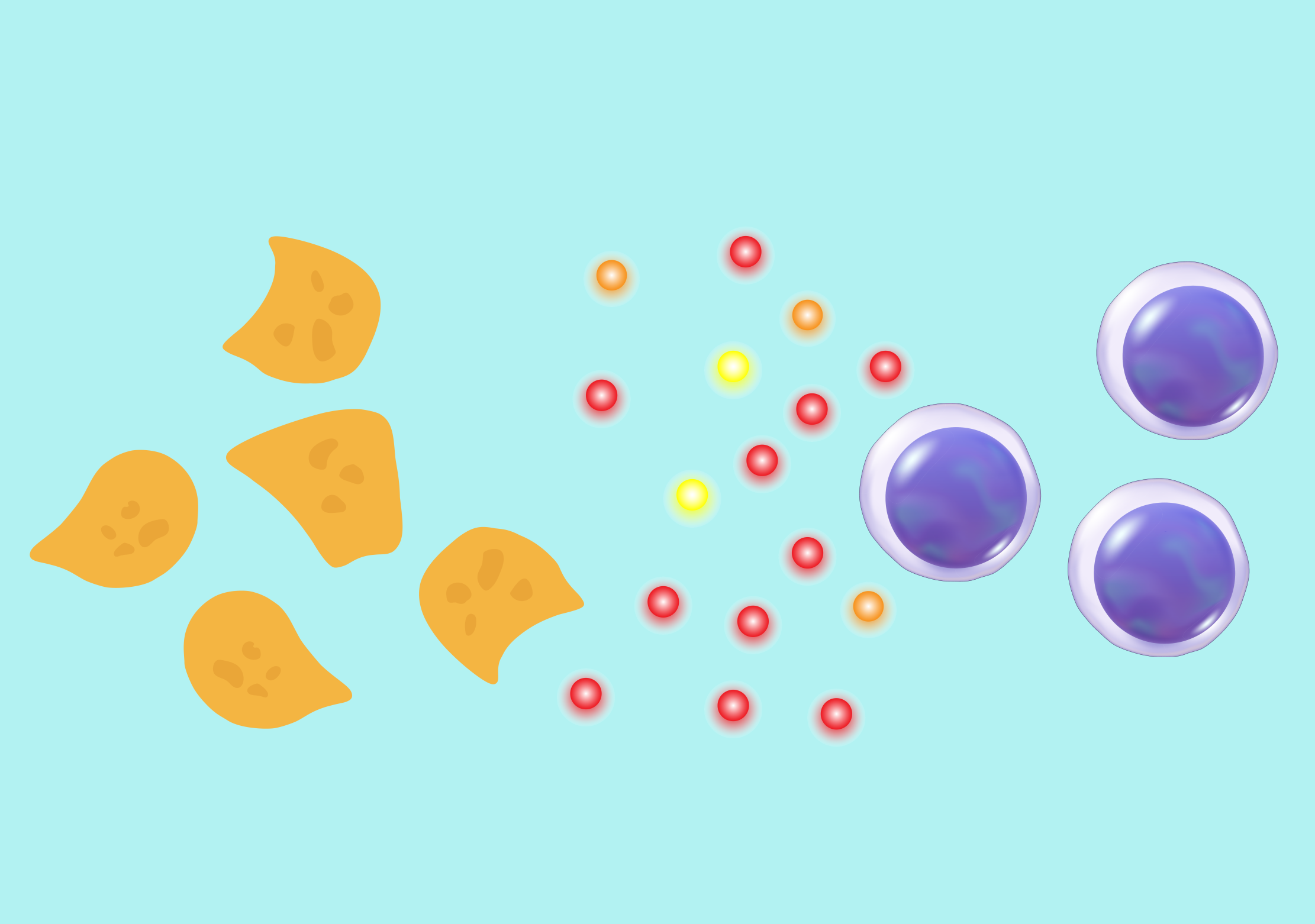
As cells differentiate, they stiffen the surrounding tissue by producing collagen. That stiffness, in turn, encourages neighboring cells to also differentiate. The result is a self-propagating “wave” of change, like a biomechanical domino effect, pushing the bone front forward without the cells themselves traveling.
The team’s high-resolution imaging showed that this differentiation front outpaced individual cell movement. Mathematical modeling confirmed that a feedback loop between tissue stiffness and differentiation could explain the pattern, with no migration required.
This insight reframes skull growth as a dynamic interplay between cell behavior and mechanical forces. The implications extend beyond skull biology. In regenerative medicine, understanding how tissues self-organize could open new ways to guide growth, not by building elaborate scaffolds or delivering precise biochemical signals, but by fine-tuning the mechanical environment so cells organize themselves. In bioengineering, stiffness-driven organization could inspire more effective methods for tissue and organ construction.
Perhaps more strikingly, Tabler’s work challenges the assumption that motion always means migration. In dense, tightly packed tissues, development can proceed through transformation rather than travel, a subtle but powerful way nature solves structural challenges.
Skull growth, it turns out, is not just biology in action, it’s a wave of physics, feedback, and cooperation, elegantly sculpting the protective dome that surrounds our brains.