
Social and Behavioural
Explore Social and Behavioural

Lena Queen | Why Supporting Healthcare Staff Is the Key to LGBTQIA+ Health Equity
When we talk about improving healthcare for LGBTQIA+ communities, the conversation usually focuses on policy, training, and access to services. But Mx. Lena Queen, a therapist and wellness educator with over 23 years of experience, argues that we are missing a critical piece of the puzzle: the emotional and mental wellbeing of the providers themselves. In their recent paper, Queen makes the case that healthcare providers cannot genuinely support LGBTQIA+ patients if they are burnt out, exhausted, or working within systems that ignore their own needs.

Jila Ghomeshi | How Canadian Weather Forecasts Are Challenging Grammar Rules
Weather forecasts seem straightforward – temperatures, clouds, maybe a bit of rain. But the language used to describe the weather can reveal surprising quirks about how English works. A recent linguistic study takes a closer look at an unusual pattern heard in Canadian radio forecasts and shows that even familiar phrases like “we are five degrees” can challenge long-held assumptions about grammar.

Dr Ludwig Huber | How Dogs Remember Your Perspective, to Steal Without Getting Caught
What goes through a dog’s mind when your back is turned? According to new research from the University of Veterinary Medicine Vienna, the answer might surprise you. A study led by cognitive scientist Ludwig Huber suggests that dogs are capable of something remarkably sophisticated: anticipating what a person can see, even when that person is nowhere in sight.

Hope Walks: Early Clubfoot Treatment Transforms Children’s Lives
In many low- and middle-income countries, children born with physical disabilities face lifelong barriers that limit their ability to learn, play, and participate in their communities. One such condition is clubfoot, a congenital deformity that twists a baby’s feet downward and inward. While it is routinely corrected in wealthier nations, lack of access to treatment in poorer regions often leaves children disabled for life. In research funded by the University of Notre Dame, Bruce Wydick, Gianna Camacho, and Patrizio Piraino reveal how early, affordable treatment for clubfoot can transform not only a child’s mobility but nearly every aspect of their well-being.

Dr. Khuthala Mabetha | How Social Support Shapes Pregnancy for Young Women in South Africa
Pregnancy can be a time of excitement and hope, but it can also bring uncertainty, stress and emotional upheaval, especially for young women navigating major life changes. A study led by Dr. Khuthala Mabetha and colleagues sheds light on how social support shapes the pregnancy experiences of young women in Soweto, South Africa, revealing just how powerful everyday relationships can be during this pivotal period.

Dr Susanna Bairoh | Equal Degrees, Unequal Incomes: New Evidence from Finland’s STEM Workforce
Even in countries celebrated for gender equality, women still earn less than men – and moving into science and technology does not magically solve the problem. New research by Susanna Bairoh, Satu Pyöriä and Niklas Mäkinen takes a close look at this puzzle by following the incomes of women and men working in STEM fields in Finland, a Nordic welfare state often seen as a global role model for equality. Drawing on exceptionally rich national register data, the study asks a deceptively simple question: if women and men have the same level of education, work in the same broad fields, and live in a country with strong family policies, do their incomes finally converge?
Dr Sriram Iyengar | Resilience Informatics
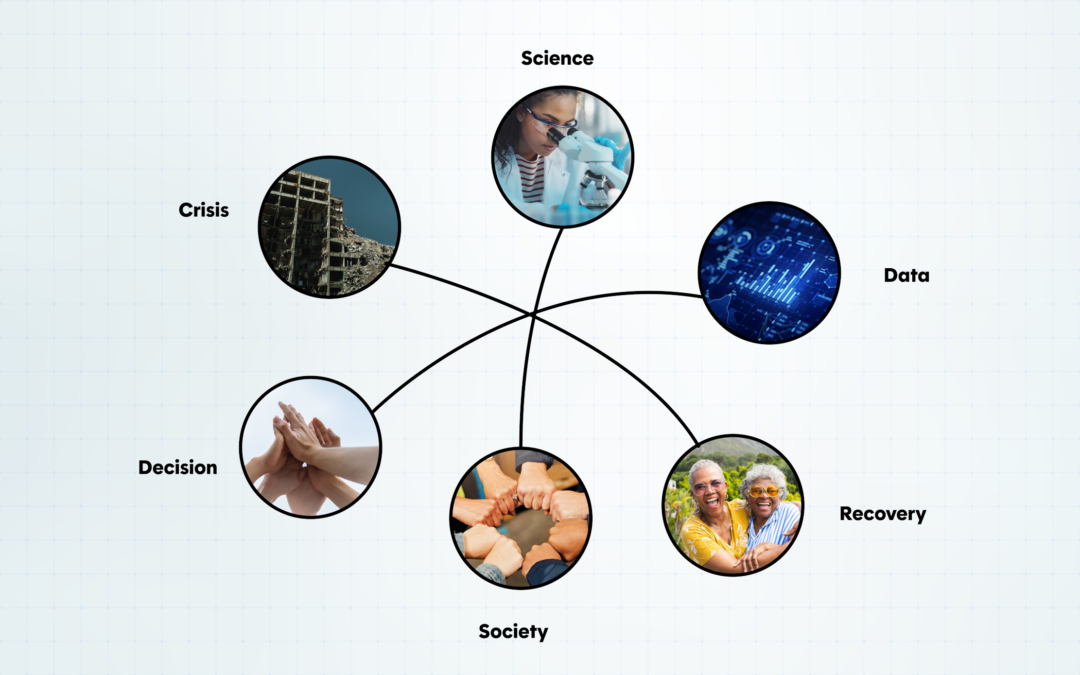
Pandemics! Heatwaves! Floods! Droughts! We live in an age of overlapping crises. Climate change is intensifying. Acute, short-term stressors and chronic, long-term stressors damage physical and mental health. Such stressors are not going away. We need to develop resilience to these stressors. But what IS resilience?

Dr Aminath Sudha | Beyond the Pay Rise: Rethinking Motivation in Public Service
When governments want public services to run better, one common solution is simple: pay people more. But new research led by Dr Aminath Sudha suggests the reality is far more complicated. Her study of civil servants in the Maldives offers a timely reminder that motivation in public service doesn’t always follow private-sector logic.
Professor Magnus S. Magnusson | The Surprising Similarities Between Human Cells and Societies
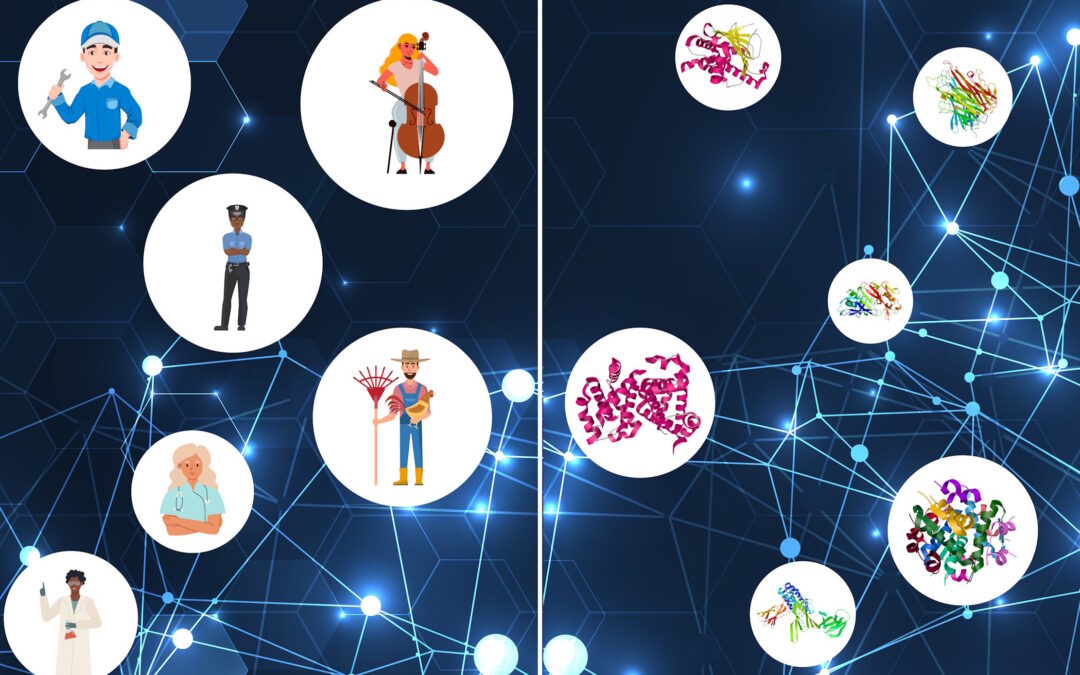
For most of history, humans lived in small groups. Then, almost overnight in evolutionary terms, billions of us began cooperating in vast, complex societies, something unmatched in the animal kingdom. How did this happen? Professor Magnus S. Magnusson of the University of Iceland believes the answer lies in an unexpected place: inside our cells. His research shows striking parallels between the way that DNA segments (called genes), form specialized proteins, and the way that text segments, called curricula, form specialized individuals.
Dr Charlotte Parham – Dr Louis Nadelson | Lessons in Connection: What School Desegregation Meant for Black Students in the American South
The 1954 Brown v. Board of Education decision is often remembered as a cornerstone of American progress, a ruling that outlawed racial segregation in public schools and redefined the nation’s educational landscape. But how did this historic shift feel to the students who lived through it? Charlotte Parham and Louis Nadelson at the University of Central Arkansas set out to answer that question through in-depth interviews with African Americans who attended segregated schools and later integrated ones. Their findings offer a nuanced look at the transition – one that highlights both the aspirations of desegregation and the challenges that followed.

Dr Ori Soltes | The War Within: How Our Search for Meaning Can Unite or Divide Us
Religion has long helped people make sense of the world, but as Dr Ori Soltes argues in a recent paper, this guidance comes with deep complications. Even the word religion contains a puzzle. It stems from the Latin religio, meaning ‘to bind back’, which immediately raises the question of what we are trying to reconnect with in the first place. That act of binding back is ultimately tied to a search for meaning – a deep human need to understand our place in the world and how we relate to everything around us. Across history, people have turned to religion to navigate existence, mortality, and uncertainty. But trying to understand that source of meaning, and then expressing it through the limitations of human language, is where the real trouble begins.
Dr Luca Nitschke | A Social-Ecological Model of How Daily Routines Intertwine with Nature
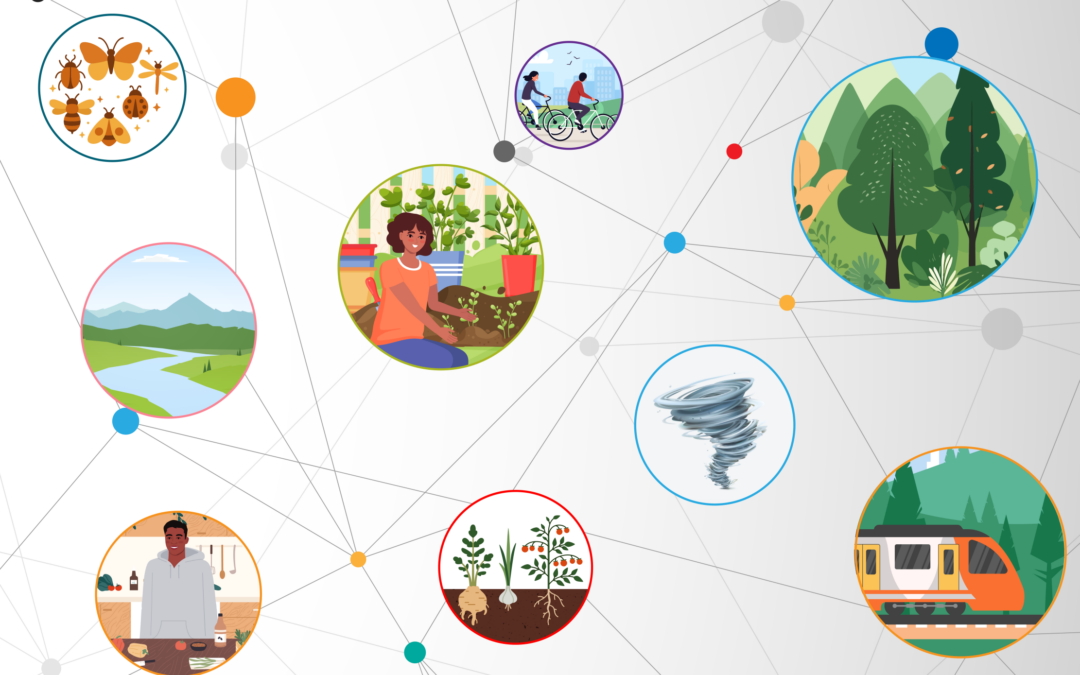
Everyday activities such as gardening or commuting might not seem like they have much to do with global environmental crises – but a new study led by Luca Nitschke argues otherwise. He and his colleagues, Lukas Sattlegger and Immanuel Stieß at the Institute for Social-Ecological Research (ISOE), introduced the idea of ‘social-ecological practices’ to show how our daily routines are deeply connected to the integrity of the natural world.
Stay Up To Date With SciTube