
Evidence, Measurement & Scientific Discovery 2026
An annual Special Edition bringing together published research animations around a shared research theme.

Open for Submissions

Annual Special Edition

Open Access
Special Edition Information
Scientific progress depends not only on collecting information, but on understanding what that information actually tells us. Better methods of measurement, interpretation and analysis can transform the questions researchers are able to ask.
This Special Edition brings together research examining how scientists observe, measure and interpret the world. From statistical reasoning and data context to advanced detection methods and fundamental physics, the collection explores the tools and ideas that underpin scientific discovery.
Edition Editor

Dr Nelly Berg
Executive Editor

Dr Jack Mroczkowski | Beyond Particles: The World of Quantum Fields
Open a physics textbook today and you’ll still likely find electrons and other fundamental particles pictured as tiny, individual objects. But this can give us the wrong picture. At the most fundamental level, physics describes not little pieces of matter moving through space, but fields that extend throughout space. Quantum field theory tells us that what we call ‘particles’ are manifestations of quantum fields. The electron is one example: rather than thinking of it as a tiny particle, we can think of it as an electron field.
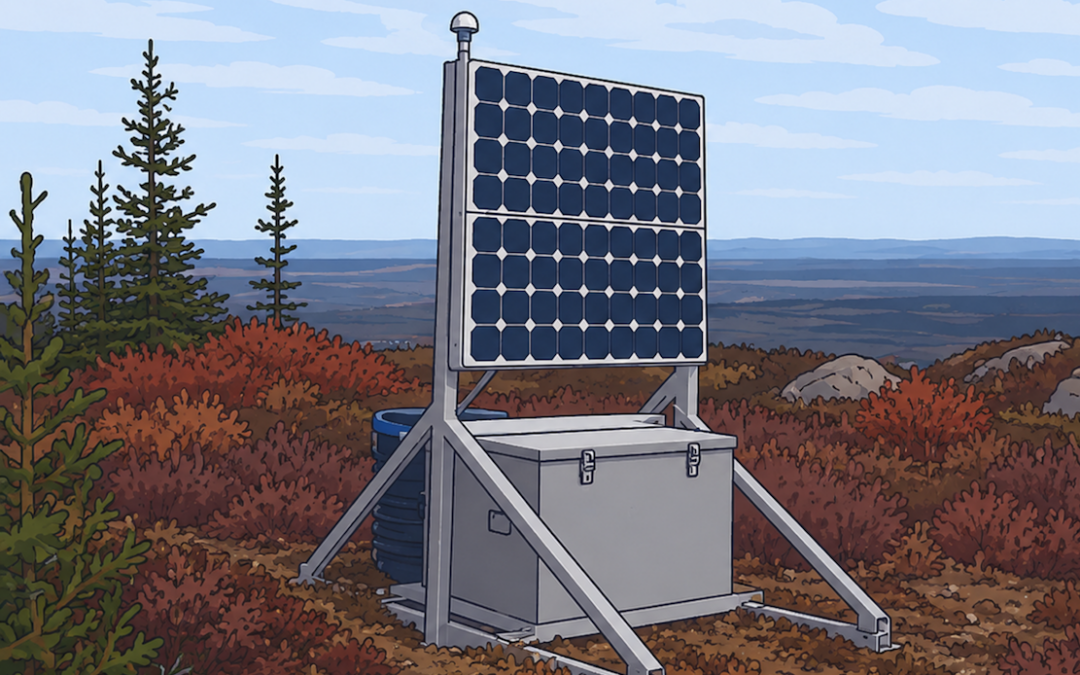
A Smarter Way to Spot Faults in Seismic Monitoring Stations
Keeping seismic monitoring stations in top condition is essential for studying Earth’s interior, and for detecting earthquakes, military explosions, ocean storms and even meteorites entering the atmosphere. But with many stations operating in remote locations, spotting the first signs of equipment problems can be surprisingly difficult. In a new study, Arthur Cuvier, Éric Beucler, Mickaël Bonnin and Raphaël Garcia in France have developed a clever statistical technique that could help scientists identify failing instruments long before serious damage occurs.
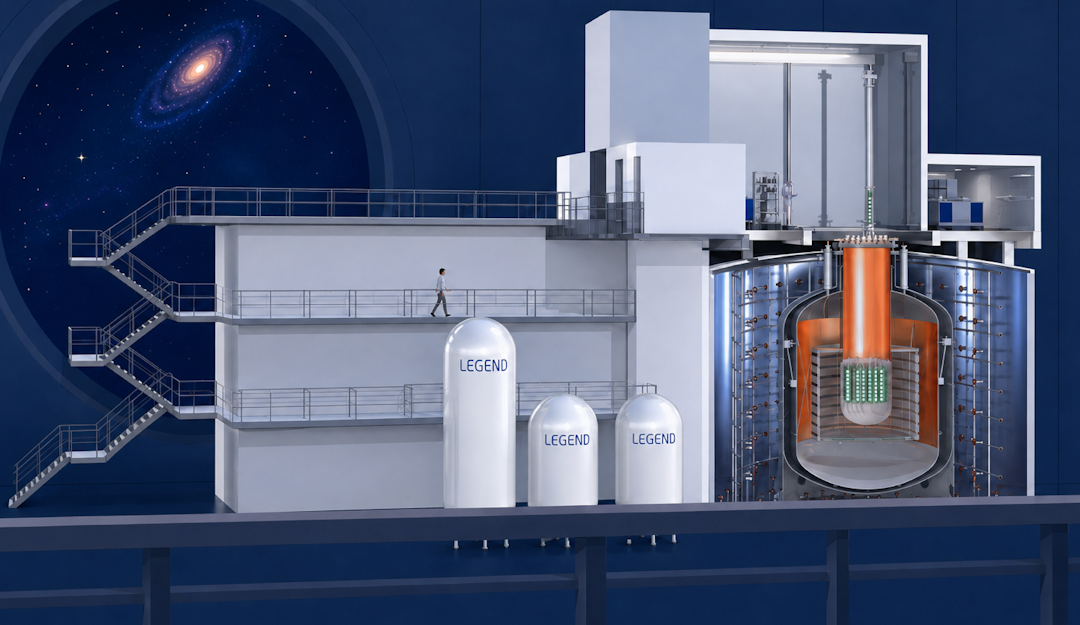
Dr Bernhard Schwingenheuer | Hunting for the Rosetta Stone of Neutrino Physics
Seventy years after their discovery, neutrinos remain one of the most mysterious particles in the universe. These ghostly entities barely interact with anything at all, making them extraordinarily difficult to study. Each second, about 70 billion neutrinos from the Sun reach every square centimetre of Earth, and they pass through the whole planet almost completely unaffected. Understanding these elusive particles could unlock some of the deepest secrets of the cosmos. Physicist Bernhard Schwingenheuer, of the Max Planck Institute for Nuclear Physics in Heidelberg, is one of the scientists leading the charge.

Professor Nigel Spooner | Shining a Light on Asbestos: How Fluorescence Technology Could Save Lives
In Australia, asbestos remains a hidden danger in countless buildings, despite being banned more than two decades ago. Roughly one in three homes still contains asbestos, and when materials degrade or are disturbed, the fibres can pose deadly health risks. Each year, about 4,000 Australians die from asbestos-related diseases – a sobering reminder of the urgent need for safer detection methods. A research team led by Professor Nigel Spooner at Adelaide University has been tackling this challenge head-on.
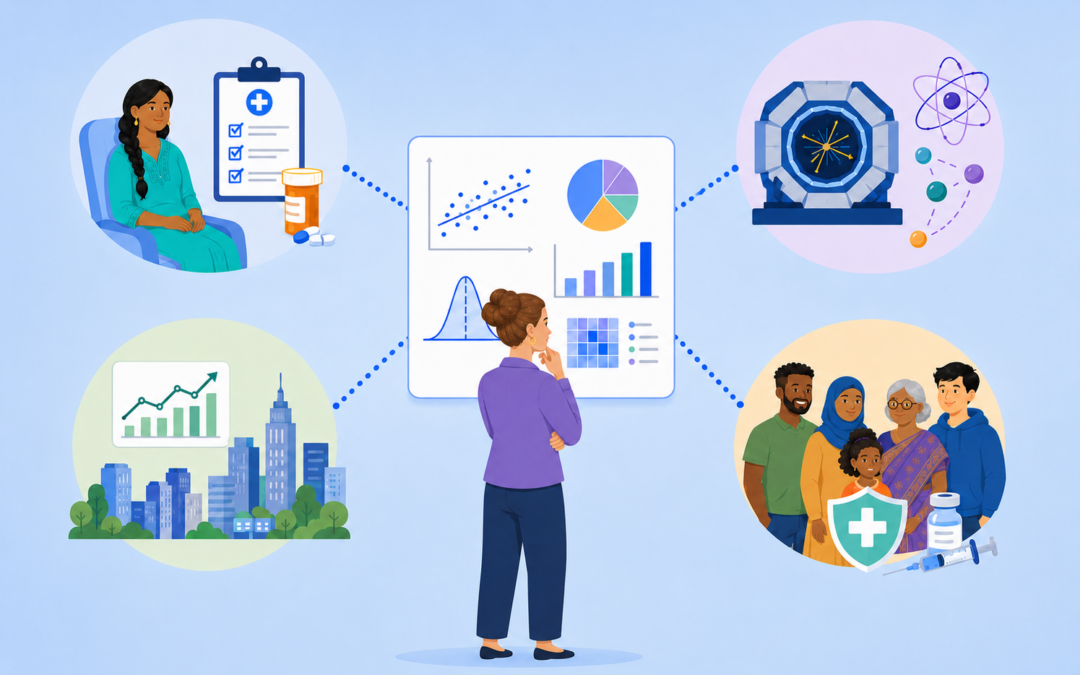
Michael Evans | Statistical Evidence and Statistical Reasoning: Rethinking What Data Really Tell Us
Statistics is everywhere. From clinical trials to particle physics, from economic policy to public health, researchers rely on statistical analyses to determine what the data are telling them. Despite this central role in modern science, there is a striking gap at the heart of the discipline: no universally agreed definition of what statistical evidence actually is. That gap matters. When scientists say ‘the evidence suggests’ or ‘based on the data we conclude’, what exactly do they mean? University of Toronto statistician Michael Evans has spent years arguing that this question is not merely philosophical – it is foundational, and leaving it unanswered has real consequences for scientific reliability.
Dr Nicholas Nicholson | Why Data Needs Context and How to Achieve it in Practice
Data are a key driver in the modern era. Combining data from different domains brings new insights and adds further dimensions to scientific research, but data on their own rarely explain themselves. Without context, data are not meaningful and can lead to erroneous conclusions. Making sense of data is at the heart of recent research led by Dr Nicholas Nicholson at the European Commission’s Joint Research Centre and Dr Iztok Štotl at the University of Ljubljana, to build a standardised data-contextualisation framework called SOLICIT.

Dr Michael L. Walker | The Hidden Energy Battle Inside Every Quantum Measurement
In the strange world of quantum mechanics, tiny particles can exist in several states at once. Yet when we measure them, we always get one clear result. This strange jump from “many possibilities” to “one outcome” is known as wavefunction collapse, and it has puzzled physicists for a century. In his paper On the Copenhagen Interpretation of Quantum Measurement, physicist Michael Walker offers a surprisingly simple explanation for how this collapse might naturally happen, without adding new physics or weird assumptions.
About SciTube Special Editions
SciTube Special Editions bring together published research animations around shared themes, creating additional opportunities for discovery, accessibility and dissemination.

How to Cite
Guidance for referencing and citing SciTube research animations.

Editorial Standards
Learn about SciTube’s editorial process, research accuracy and publishing standards.

Publication & Access
Information about publication, accessibility, licensing and dissemination.
Stay Up To Date With SciTube